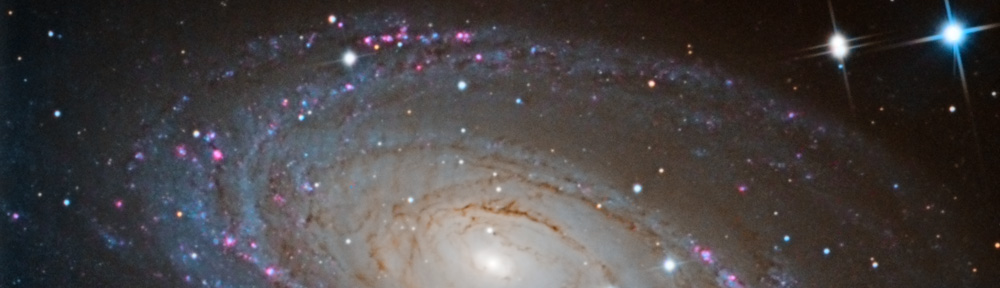
A Wonderful Night of Observing

Last weekend my brother-in-law Art and I got the scope out (the NP-101) and had a fine night of observing in Lake Riverside. Scope setup went easily. We did two cycles of alignment with Polaris and Deneb.

The first target we went to was the Ring Nebula (M57). At first, I thought the scope was totally off, as I didn’t see the nebula at all (using the 22mm Nagler). The I realized the difference between the C-11 and the NP-101 makes the nebula very small. It was almost at the center of the field of view.

The next target was M27, the Dumbbell Nebula. The dumbbell shape was clearly visible. We tried the NGC 6888, the Crescent Nebula, but it was not visible. Albireo, what I call the “Bruin Star” due to its blue and yellow color was very nice. We could see the full whirlpool shape of M31, the Andromeda Galaxy.

Then we headed south. The Lagoon was quite pretty, lots of detail in the nebula. We had shifted all of our observing to the 13mm Ethos eyepiece. It is an amazing piece of glass. We viewed globular clusters M4 and the tiny M80. Jupiter was a decent site, but M22 was a stunning globular cluster. The benefits of the Ethos really shined on this one.

We moved to M17, the Horseshoe Nebula and then looked at the Lagoon and Trifid nebulae in one view with the 44mm Panoptic. The next stop was a globular cluster tour.

We started in Ophiuchus:

  • M9 — A nice tight ball of stars
  • M10 — Best with the 9mm Nagler, as Art said, “The more you look, the more stars you see.”
  • M12
  • M14
  • M19 — Down in the soup to the southwest, but we saw it.
  • M62 — In the soup and very small.
  • M107 — Barely there, but it was there.
  • M15 — A very tight and small ball of stars.

We felt it was time for more planets. We saw Neptune as a tiny blue ball, clearly showing a disk where nearby stars did not. Uranus was similarly good to see. Then another globular, M72 in Aquarius.

On to more nebula. We looked at NGC 7009, the Saturn nebula. We could barely see the round shape. Definitely a target for the C-11. We could almost see the structure of the Helix Nebula, NGC 7293. And then came the best of the night, and it was a cluster.

The Double Cluster in Perseus has risen, and it was a great view. With the Ethos, the stars just stood out in the middle of the cluster. The view was amazing, almost 3-D. While the whole thing is visible with the 44mm Panoptic, the Ethos view was over the top beautiful. This was the most remarkable object we saw that night.

We took a quick view of M76, the Little Dumbell. Then the Moon was rising. We were able to see it moving behind the trees of Thomas Mountain to the northeast. Stunning. It would be great to get a movie of that one day.

This kind of night reminds me why I must keep observing visually. Pretty pictures are nice, but seeing objects in the sky is an experience I won’t forget.

Regulatory Update

The hearing for the plot plan change was last Monday and it was a non-event from my perspective. Our plot plan change and about 12 others were all approved in one motion in the first five minutes of the meeting. I’m certainly not complaining. We are in the 10-day comment period. I am hopeful there will be no comments.

Since I was at the building department, I filed the construction plans, complete with engineering. They are in plan check now. So we are moving forward.

First Light for the AP-900

Almost a month after it arrived, the AP-900 has seen first light. That is, perhaps, an overstatement, since I am not sure a mount can see first light. But I had it up and running last night in Lake Riverside, with the NP-101 (itself seeing light for the first time in almost 18 months).

Rather than build a model of pointing, as the CGE does, the AP-900 GTO relies on accurate polar alignment and the correct time. Using the NP-101 (about 500mm focal length) two cycles of polar and other star alignment led to adequate goto capabilities. Everything I pointed at was in the field of view of a 9mm Nagler or 13mm Ethos.

Unlike the CGE, when it slews to an object, it just arrives. The CGE gets close, then moves up and right to the final point. The AP gets to the position and stops. Confidence in mechanical operation no doubt.

I took two sets of shots with the USB camera. I forgot the TCF to NP-101 adapter so that I wasn’t able to do any CCD imaging. I am not ready for multi-location imaging. I find it stressful enough to get all the equipment in one place. I hope that place will be in Lake Riverside, but that will take time.

Here is a shot I took of the Moon. It is a mosaic of three sets of AVIs, stacked in Registax, merged in Photoshop, and processed in PixInsight.

First Quarter Moon

Regulated!

With a vacation last month, I missed getting this posted, but here’s the news.

The forces of zoning and regulation have slowed progress on the new observatory. When our architect went to file the building permit, he was informed that, because our garage is detached, a plot plan change would need to be submitted. This will require a review by the planning department and a public hearing.

Riverside County instituted a new rule in March of this year to require a more public review on new accessory buildings. Apparently, some people were building large or ugly or view-blocking buildings and neighbors did not have a way to comment or possibly prevent the construction of an inappropriate outbuilding. We got snagged by that rule.

Normally, a building under 400 square feet doesn’t require a plot plan review. However, any second building, regardless of size, does require a review. At 208 square feet, this seems a bit unfair, particularly because the project is subject to Lake Riverside Estates’ CC&Rs, and that includes a review by the Architecture Committee. We are all OK on that front.

So we are now waiting for the next step. The planning department has apparently approved the project from their perspective, and I am waiting to hear what the next step is.

UPDATE August 4, 2008

We’ve been notified that the hearing is next Monday, August 11. I hope that it goes OK.